“ I am network rich with people who understand the fundamentals of privilege and oppression, both interpersonally and institutionally. ”
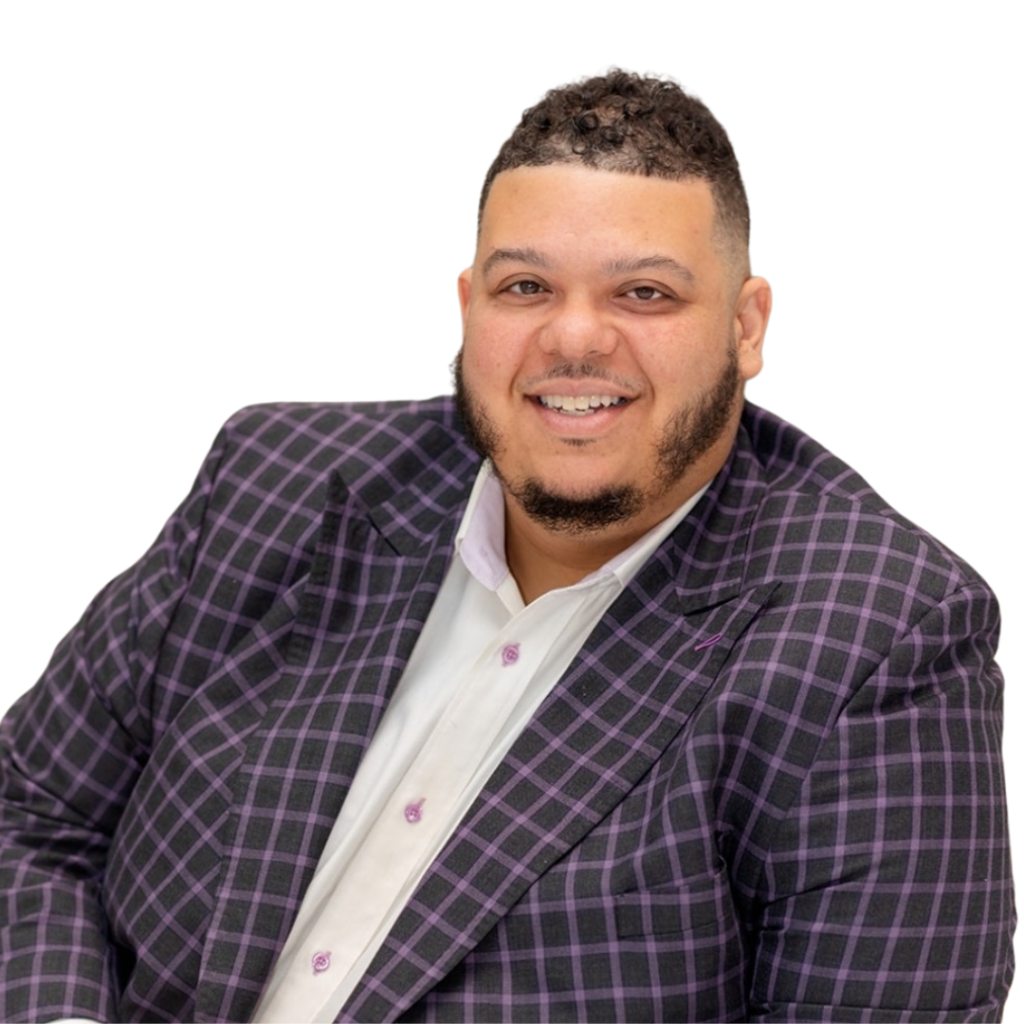
Hi Brice! Please tell us your quick and dirty bio
I’m a Cincinnati-area native. Born and raised on the westside of town. Just barely graduated Walnut Hills High School and then ended up at UC, where I thrived (the second time around). It was there I discovered conversations around Diversity, Equity, and Inclusion (DE&I) through a nationally recognized intergroup dialogue program called RAPP (Racial Awareness Program). Since then I’ve taken every opportunity to be involved in these conversations that I can find, whether that’s through speaking at GLSEN’s Annual Youth Summit in Northern Kentucky or as a panelist for the City of Cincinnati’s LGBTQIA+ Inclusive Employee Resource Group, City Pride. I was also very purposeful in finding work opportunities that aligned with my passion like supporting underrepresented emerging leaders with Public Allies Cincinnati or working to make our local institutions more inclusive through training at Avant Consulting Group or community engagement at Cohear.
How did you really find the passion for the work you do?
As I mentioned in the last question, RAPP was where it all started. That program started by the late, great Linda Bates Parker in 1986 changed my whole life. Suddenly I had language to describe the power dynamics I saw at play in my everyday interactions. I wasn’t less-than because I was fat or Black or queer, but I was socialized to believe so. I received messages, both covert and overt, to reward me for certain behaviors and/or identities, while I was punished for others. I stuck with the program for years because of all of the lightbulb moments, the language, and most of all, the support. I was never in a fraternity or sorority, but I imagine the support I received and continue to receive from my former peers is similar. I am network rich with people who understand the fundamentals of privilege and oppression, both interpersonally and institutionally.
How strong do you think the LGBTQ+ community is in Northern Kentucky and the tri-state?
I absolutely believe the LGBTQ+ community in the Tri-state and especially Northern Kentucky is strong and vibrant. What I can’t say definitively is whether that is because of or in spite of the community around us at large. I believe adversity, just or unjust, builds character and resilience and I can say, without getting into the details or the history, our community is extremely resilient and has a lot of character. It may not be the easiest thing to spot “your people,” but when you do, they are usually exceptional, because they’ve had to be to thrive in spaces that weren’t necessarily built with them in mind.
How was it when you were first in this area?
I’ve always been in this area so I don’t know anywhere else. That being said, I can remember having very racialized experiences from a very young age. I remember our room in kindergarten being split into Black and white students one day (no idea why). I was “dating” a white girl at the time and when she pulled me to the white side of the room, but my teacher grabbed me by the arm and said no you belong on this side and pulled me toward the Black side. I am multi-racial for context – half Black, quarter white, quarter Japanese. I was both and there was no Japanese side of the room so in that moment I knew I was othered and put into a box, but I had no language for that. I can also remember serious bullying because of my queerness and my weight.
Are you comfortable telling your own coming out story?
I love this question and I laugh at it because as I’m sure so many of your readers are aware, there is no one definitive story for a lot of us. In many ways this article is the first time I’ve said it outloud in a way that others can read. I even texted my boss to say that I was nervous to say I’m queer in this piece while she cheered me on. Sometimes I choose to come out in my DE&I workshops to drive a point home, but there are other times I do not whether that’s for pedagogical reasons or safety (which is always a consideration).
How well do you think youth are supported locally?
I think we have some great resources in Northern KY and the tri-state area at large. The biggest issue I see is the disconnect between the resources and the people that need them most. It’s great to have a GSA, but if the LGBTQIA+ students at your school are being bullied, how many of them are too afraid to attend? Support groups are awesome, but if parents are ignorant of the benefits or unable to afford to get there, how can those in need attend? Are our LGBTQIA+ inclusive spaces racist, sexist, classist, ableist because if so, they really aren’t LGBTQIA+ inclusive.
What do we absolutely need in our community but is lacking?
I wish there was more of a sense of community in our spaces. We’ve lost so many spaces that were dedicated to queer people meeting up. I think that is to a large extent because we feel more welcome in spaces that were exclusively cishet, which is largely positive. At the same time, there are less spaces dedicated to uplifting us specifically and I think we need those or we need to find a way to do that in these new spaces.
What is the future for Brice?
I imagine my future will be based around growing a community of advocates here in Cincinnati. I told my mentor once that I was jealous of her and the impact she’s had all over the world because she travels and does so much community work. She told me to my surprise that she was jealous of me because of the tremendous impact I’ve had just here in one city. She said, “I’ve had a bunch of little impacts all over because I’ve never stayed in any one place for too long. You’ve had a huge impact in Cincinnati because you are basically an institution in and of yourself.” I want to do right by hometown and I see so much potential.
Kentucky Black Pride Turns 10 in the Park That Sheltered Queer Lexington
October 10, 2026/in Community, Culture/by CE Courtney Reynolds
Kentucky Black Pride celebrated its 10th anniversary in September with a four-day festival in Lexington aimed at community, resources, and self-expression.
The four days each carried their own program. Thursday opened with Healthy Sexual Talk, a sexual health session marking National Gay Men’s HIV/AIDS Awareness Day, followed by Ladies Night. Friday brought the Mr. and Miss Kentucky Black Pride pageant. Saturday filled Woodland Park with Pride in the Park, the festival’s centerpiece. Sunday closed with community awards and a day party.
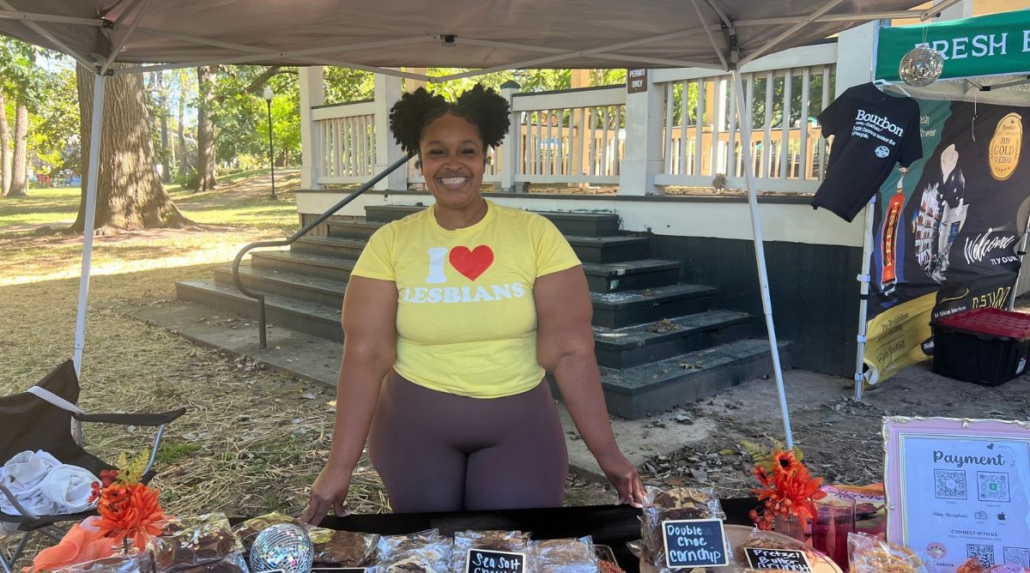
Among the first-timers at Woodland Park in Lexington was Tiffany Knight, of Bowling Green, Kentucky, who came to promote her cookie company, Eat Q Cookies.
“Where I am from is not as diverse. This is my first event where it is specifically Black oriented and it is really nice to see the community come together.”
Pride in the Park featured booths from aligning community and health resources, from CASA of Lexington, who are court appointed youth advocates, to the Lexington-Fayette County Health Department, who was on hand to share Narcan, COVID tests and condoms. Local designers sold Pride merchandise from buttons to jean jackets. A drag show followed at 1PM during the park extravaganza.
Kentucky Black Pride was founded in 2016 by Shawn Bumpase, after a conference call with other LGBTQ+ community members about the state of Kentucky’s Black queer community. By January 2017, the organization was official, with a home on South Broadway in Lexington. Kentucky Black Pride, Inc is a 501c3 non-profit organization that provides financial assistance, counseling and other community services.
Why Kentucky Black Pride stays at Woodland Park
Lexington has a storied history with the queer community. Its most notable member being Sweet Evening Breeze, who would perform drag here starting in the 1950s. Breeze is now honored with a downtown mural not far from where she was arrested for cross-dressing in the 1960s. And by 1981, the park hosted queer events supported by the Gay Student Organization of University of Kentucky. The Faulkner Morgan Archive in Lexington preserves that history.
Woodland Park remains the host location of Kentucky Black Pride because of that community support, said co-chair Suga Dawson.
“We stay with Woodland Park because in the 1950’s, before drag was legal, Woodland Park supported the gay community, not just our community,” Dawson said. “So we stay to show respect and support.”
Dawson, in her fourth year with Kentucky Black Pride, helped run the weekend. where she explained what it means to her: “It’s self-expression in a nutshell; the parts of me that aren’t as prevalent when you meet me.”
A festival that works year-round
Kentucky Black Pride hosts its festival each September as part of Roots and Heritage Festival month, but the nonprofit works year-round. Its “Let’s Talk” series gives the Black queer community its own town hall while the organization also supports youth school supplies initiatives.